
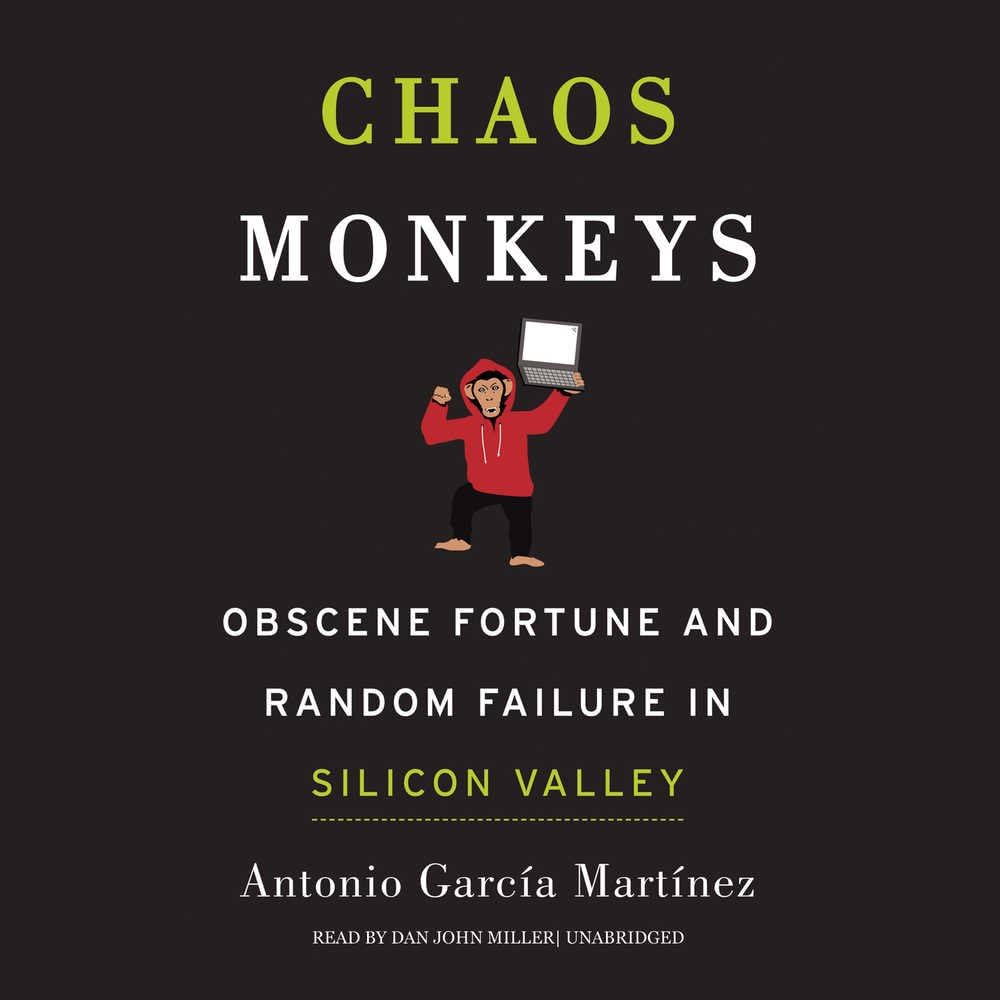
I just finished Chaos Monkeys – Antonio García Martínez’s memoir about ad tech, Y Combinator, and Facebook. It’s messy and sometimes arrogant, but it’s the most honest thing I’ve read about how Silicon Valley actually works. The core argument is uncomfortable: success is less rational than we pretend.
Take intelligence. García Martínez was in the bottom third of his physics PhD class at Berkeley. He calls himself a crappy programmer who can only hack crude prototypes. Most successful founders he met weren’t geniuses – they were quick and crafty, but not the people winning awards in academia.
What separated them was something else: the ability to focus on one thing obsessively, at the expense of everything else, and the ability to take punishment – setbacks, rejection, doubt – without quitting. Startup survival as endurance sport. The people who last aren’t necessarily the most talented. They’re the ones who keep showing up when it gets bad.
I don’t know if intelligence is irrelevant – that feels like overcorrecting. But there’s something freeing here. “I’m not smart enough” stops being an excuse. If the game is really about focus and endurance, those are things you can build.
But even focus and endurance don’t guarantee anything. García Martínez keeps describing outcomes that make no sense on paper – the wrong company gets acquired, the mediocre product wins, politics and timing trump quality. He watched smart engineers get outmaneuvered by people who understood human motivation better than code.
There’s a line that stuck with me: engineers would be better served reading less Neal Stephenson and more Shakespeare. I think he’s right. I’ve seen it – brilliant technical people who can’t read a room, can’t tell when they’re being managed, can’t understand why their elegant solution lost to something worse. The technical stuff is necessary, but it’s maybe half the game. Understanding people is the other half.
So if intelligence isn’t enough, and even skill and hard work can lose to politics – what do you control?
García Martínez’s answer is what risks you choose to take. He describes a fork everyone eventually faces. One path is about doing something – trusting your own vision, building what you believe in, even if your peers think you’re crazy. The other is about being someone – getting the prestigious role, collecting the safe wins, optimizing for how things look.
The second path feels safer. But he argues it carries its own risk: you never take a real swing, and years later you’ve built nothing that mattered to you.
He has a useful framework for evaluating swings, too. Ask how many miracles a startup needs to succeed. Zero miracles means it’s not a startup – it’s just a regular business. One miracle is the sweet spot. Airbnb needed one: getting strangers to host strangers. Google needed one: building search that was exponentially better than anything else. Two or more miracles? Usually a death sentence. His own startup, he admits, required a Bible’s worth of them.
The thing that ties all of this together is a mantra he keeps returning to: this too shall pass. It humbles the proud and consoles the unfortunate. If outcomes are messier than we think, if the wrong people win and the right people lose, if the safe path isn’t actually safe – then maybe the only sane response is to hold it all a little more loosely. The wins fade faster than you expect. So do the losses.
García Martínez is smug and some of his takes haven’t aged well. But this part I believe: it’s messier than the story we tell. Knowing that doesn’t change the game, but it does help you play it with clearer eyes.